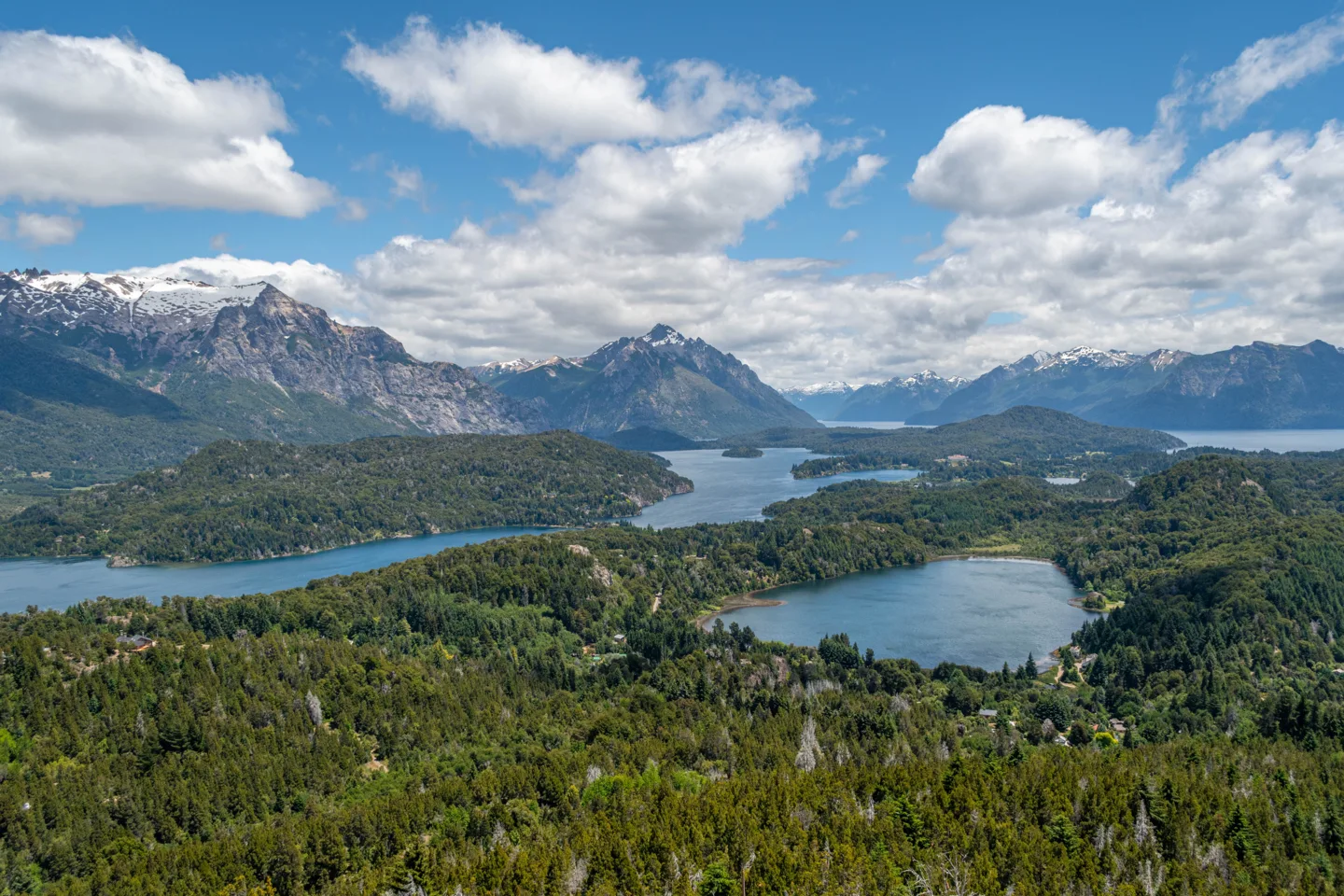
Argentina is the eighth‑largest country in the world and, after Brazil, the second‑largest in South America. You can feel that scale in the immense variety of landscapes. In the northeast you’ll find tropical rainforest, in the north the dry Chaco region, in the northwest colourful rock formations, and in the south rugged mountains. Its wildlife is just as diverse, making Argentina a fantastic destination for animal lovers. It is a country of overwhelming diversity, where nature and culture come together in perfect harmony to captivate travellers. Let yourself be inspired by the magic of Argentina and prepare for a journey filled with adventure and wonder.
Argentina content
Everything you need to know before your trip
About Argentina
The official capital of Argentina is Buenos Aires, a vibrant metropolis on the Río de la Plata. The country has around 46 million inhabitants, with a population largely of European descent. Argentina is the seventh largest country in the world and the second largest in South America, with an impressive geographic diversity ranging from the subtropical jungles in the north to the icy plains of Patagonia in the south.
Health and vaccinations
Argentina generally offers good healthcare and fewer tropical risks than some neighboring countries, but there are still several important points to keep in mind.
Vaccinations Routine
Vaccinations should be up to date. Hepatitis A is recommended for all unvaccinated travelers. Hepatitis B is recommended for unvaccinated travelers under 60 and optional for those over 60. Yellow fever is recommended only for travelers visiting Corrientes and Misiones provinces. It is not recommended for Formosa, Chaco, Jujuy or Salta and not needed in other parts of the country. Rabies exists in dogs, wildlife and bats. Pre‑exposure vaccination is only relevant for travelers with occupational or recreational risk. Measles vaccination is strongly advised due to rising global cases.
Mosquito‑borne diseases
Dengue occurs in northern provinces such as Misiones and Corrientes, especially during the rainy season. Protect yourself with DEET, long clothing and screened or netted sleeping areas. Chikungunya, Zika and leishmaniasis are present in parts of the country. Prevention focuses on avoiding insect bites.
Other health risks
Leptospirosis has increased, particularly after heavy rainfall or flooding. Avoid contact with potentially contaminated water or mud. Hantavirus exists in some rural areas. Avoid contact with rodents and their droppings.
Food and water
Drink bottled water whenever possible, including in cities. Be cautious with raw foods and street food to reduce the risk of gastrointestinal illness.
Travel health kit
Bring essentials such as oral rehydration salts, anti‑diarrheal medication, painkillers, plasters and any personal prescriptions. Access to medical care can be limited in remote areas.
I aim to keep this information as up to date as possible, but health advice can change quickly. Always check the latest official guidance before you travel. See the CDC travel health advice for Argentina.
Safety
Argentina generally has a safe travel advisory, but there are risks, especially in larger cities. Crime such as pickpocketing and robberies does occur, and tensions can arise in certain border regions. The United States currently advises normal precautions throughout the country, with increased caution specifically in the city of Rosario due to higher crime levels.
Safety tips
Be alert in cities such as Buenos Aires, Córdoba and Rosario, especially on public transport and in busy tourist areas. Avoid demonstrations, which occur regularly and can escalate quickly. Use only official taxis or trusted ride‑hailing apps such as Uber, Cabify or DiDi. Keep valuables out of sight and use a money belt or inner pocket. Be cautious when using ATMs, as card skimming can occur, particularly in touristy or remote areas. Travel at night only when necessary, especially outside major cities.
I aim to keep this information as up to date as possible, but travel advisories differ by country and can change quickly. Always check the latest guidance from your own government before you travel. For reference, you can also consult the U.S. Department of State travel advisory for Argentina.
Practical travel information
Best time to visit and climate
Argentina spans several climate zones. Patagonia and Tierra del Fuego are best visited from November to March, the summer months in the Southern Hemisphere. The Iguazú Falls can be visited year‑round, with slightly more rainfall during the Northern Hemisphere winter. Buenos Aires is most pleasant in spring and autumn, roughly September to November and March to May.
Currency and money
The currency is the Argentine peso (ARS). Due to ongoing economic fluctuations, the difference between official and informal exchange rates can be significant. Credit card acceptance varies, especially outside major cities. Carrying some cash, preferably US dollars or euros, can be useful for exchanging locally at favorable rates. ATMs are available, but withdrawal limits are often low and fees can be high.
Visa and passport
Most travelers can enter Argentina visa‑free for stays of up to 90 days, depending on nationality. Your passport should be valid for at least six months upon arrival. Because entry requirements differ per country, always check the latest information from your own government or the Argentine immigration authorities before traveling.
Time zone
Argentina is in time zone UTC‑3 and does not observe daylight saving time. Time differences with your home country depend on whether your region uses daylight saving time and on its position relative to UTC.
Power outlets and voltage
Argentina uses plug types C and I. The standard voltage is 220 volts at 50 Hz. A universal travel adapter is recommended.
Internet and connectivity
Mobile internet and WiFi are widely available in cities. Coverage becomes less reliable in rural and remote areas. Local SIM cards from providers such as Claro, Movistar and Personal are affordable and easy to obtain.
Getting around
Long distances can be covered comfortably by overnight buses, usually in semi‑cama or cama class. Domestic flights are convenient for major routes across the country. In cities, taxis and ride‑hailing apps such as Uber are commonly used. Renting a car offers flexibility, but road conditions in Patagonia can be rough, especially on gravel routes.
Culture and local information
Language
The official language of Argentina is Spanish. The local variety, Rioplatense Spanish, is known for its distinctive pronunciation of “ll” and “y”, which often sounds like “sh”. English is reasonably spoken in tourist areas, but learning a few basic Spanish phrases is very helpful. Several Indigenous languages are also spoken in specific regions, including Quechua, Guaraní and Mapudungun. These are not needed for travel, but they form an important part of Argentina’s cultural heritage.
Culture and etiquette
Argentinians are generally warm and social. Personal interaction is important, and people often greet each other with a kiss on the cheek, including between men and women. Political topics and historical events, such as the military dictatorship of 1976–1983, can be sensitive, so approach them with respect. Argentinians are proud of their culture, football and food traditions, and showing interest is a great way to connect.
Holidays and events
Carnival, celebrated in February or March, is especially lively in the northern regions. March 24 is the National Day of Remembrance for victims of the military dictatorship. The Feria de Mataderos in Buenos Aires is a popular event for experiencing local culture and folklore. The Fiesta Nacional de la Vendimia in Mendoza, held in March, is the country’s major wine harvest festival.
Food and drink
Argentinian cuisine is known for its meat dishes, including asado, empanadas and milanesa. Vegetarian options are becoming more common, especially in larger cities. In remote areas, it is safest to drink bottled water. In Buenos Aires and other major cities, tap water is generally safe, though the taste may differ from what you are used to. Mate, a traditional herbal drink shared socially, is an important part of Argentinian culture and worth trying.
Nature and wildlife
Argentina is an enormous and diverse country, home to ecosystems ranging from tropical wetlands to Patagonian glaciers. For nature lovers and wildlife enthusiasts, it offers exceptional opportunities.
Iberá Wetlands
The Iberá Wetlands are one of the largest wetland systems in the world and extremely rich in wildlife. You can spot caimans, capybaras, marsh deer, anacondas and a wide variety of bird species, including jabirus and scarlet ibises. Conservation efforts in recent years have also reintroduced species such as the giant anteater and the pampas deer.
Patagonia
Patagonia is known for its vast landscapes, glaciers and dramatic mountain ranges. Wildlife includes guanacos, rheas, foxes and Andean condors, with occasional sightings of pumas in remote areas. Los Glaciares National Park remains one of the region’s major highlights.
Península Valdés
This peninsula is one of the best places in South America for marine wildlife. Depending on the season, you can see southern right whales, sea lions, orcas, penguins and dolphins. Magellanic penguins breed here in large colonies, especially from September to March.
Misiones rainforest
The northeastern province of Misiones is home to lush subtropical rainforest, part of the Atlantic Forest biome. Iguazú National Park hosts tapirs, coatis, toucans, monkeys, giant anteaters and, in remote areas, even jaguars. The region is one of Argentina’s most biodiverse areas.
Quebrada de Humahuaca and the Puna highlands
This region features spectacular multicolored mountains and high‑altitude plateaus. Wildlife includes llamas, vicuñas and alpacas, along with many birds of prey and unique desert vegetation.
Yungas cloud forests
The Yungas are subtropical cloud forests stretching through Jujuy, Salta and Tucumán. They are ecologically important and home to monkeys, toucans, deer, butterflies and a wide variety of plant species. The area is less visited but highly biodiverse.
Gran Chaco
A vast dry forest and savanna region covering northern Argentina, Paraguay and Bolivia. In Argentina it spans Formosa, Chaco, Santiago del Estero and parts of Salta and Córdoba. Wildlife includes jaguars, pumas, tapirs, armadillos, peccaries, giant anteaters and numerous bird species. It is one of the most biodiverse dry forests in the world.
Tierra del Fuego
At the southern tip of the continent, Tierra del Fuego offers beaver dams, southern seabirds and marine wildlife such as whales and sea lions in the surrounding waters. The region’s rugged landscapes make it a unique destination.
Andes region
Along the border with Chile, the Andes are home to the Andean condor and offer chances to see pumas, deer and fox species in high‑altitude valleys and steppe areas.